NDA Current Affairs | 13 Sep Exam
Practice Now

Indian Economic Planning and Five Year Plans – NDA Economy Notes
Exam Relevance: High Frequency | SI Units · Dimensional Formulae · kWh · Light Year · Gravitational Constant G · Precision
Reading Time: 20–25 minutes | Last Updated: 2026
After Independence, India had to rebuild a very weak economy. The country was poor and its industry was small. Farming produced too little food for a growing population. Roads, power supply and railways were far from sufficient. The government could not solve every problem at the same time. It therefore decided to plan its economic development carefully.
Planning means deciding in advance what the country wants to achieve. It also means giving money and priority to those chosen goals. India followed this method through a series of Five Year Plans. These plans guided the Indian economy for more than sixty years.
This chapter tells the complete story of Indian economic planning. You will learn why India chose planning after 1947. You will learn who built the planning machinery. You will then study the Five Year Plans in order. The NDA syllabus asks for elementary knowledge of India’s Five Year Plans. Almost every Economy question in the examination comes from this area. Most questions ask which plan carried which objective or slogan. Others ask who prepared a particular plan or model. So read the tables in this chapter with special care.
| PART A: HOW INDIA CAME TO PLAN |
1. Why India Chose Economic Planning
When India became independent in 1947, its economy was weak. During British rule, India’s resources were used mainly for British interests. Indian industry stayed small and depended on imported machines. Agriculture supported most people but produced very low yields. Poverty, hunger and unemployment were found everywhere in the country. Partition had also displaced millions of people in 1947. They needed homes, land and work almost immediately.
A poor country has very limited money to spend. Every rupee used in one place cannot be used elsewhere. The government therefore had to fix its priorities in advance. This is the simplest reason why India chose economic planning.
What Planning Actually Means
Planning means setting national goals for a fixed period. The government then decides how resources will reach those goals. It fixes targets for farming, industry, power and education. It also decides how much money each sector will receive. A plan is therefore a decision about priorities. It is not simply a list of good wishes.
Where the Idea of Planning Came From
India did not invent the idea of economic planning. The Five Year Plan was first launched in the USSR. [NDA 2020] The Soviet Union used such plans from the late 1920s onward. Its rapid industrial growth impressed leaders across the world. Indian nationalists watched that experiment with great interest.
A second influence came from Britain rather than from Russia. Planning in India drew on the Fabian socialism of Sidney and Beatrice Webb. [NDA 2010-I] Fabian socialism wanted gradual social change through the State. It rejected revolution and preferred reform through elected governments. Many Indian leaders, including Nehru, were attracted to this approach.
Students often confuse this with Lenin’s New Economic Policy. The New Economic Policy allowed limited private trade inside the Soviet Union. It was a Soviet recovery measure of the early 1920s. It was not the source of Indian planning. Keep the Soviet Five Year Plan device separate from that policy.
A third influence came from Indian industrialists themselves. The idea of planning in independent India was drawn from the Bombay Plan. [NDA 2022-I] That plan is explained in the next section.
2. Planning Before the First Five Year Plan
Planning was discussed in India long before 1951. Several groups prepared their own plans for national development. Each group had a different idea of what India needed. These were only proposals and never became government programmes.
National Planning Committee, 1938
The Congress session at Haripura was held in 1938. Subhas Chandra Bose presided over that session as Congress President. The idea of a planning commission was introduced there. The Congress then set up the National Planning Committee in 1938. The committee worked under the chairmanship of Jawaharlal Nehru. Its task was to prepare a development plan for the country. The Second World War and political arrests slowed its work. Even so, it fixed the idea of planning in the national mind.
Bombay Plan, 1944
Eight leading Indian industrialists prepared the Bombay Plan in 1944. J.R.D. Tata and G.D. Birla were among them. They wanted national income to rise sharply within fifteen years. Their most surprising suggestion concerned the role of the State.
The Bombay Plan emphasised public sector investment in infrastructure and heavy industry. [NDA 2011-I] Students expect businessmen to demand a free private market. These industrialists asked for the opposite in key areas. Roads, power, steel and machinery need huge long-term investment. Private companies could not raise such large amounts at that time. Returns from such projects also come very slowly. The industrialists therefore wanted the State to build this base. Private industry could then grow on top of it.
Gandhian Plan, 1944
Shriman Narayan Agarwal prepared the Gandhian Plan in 1944. He was then the principal of a commercial college at Wardha. The plan followed the economic ideas of Mahatma Gandhi closely. It placed the village at the centre of development. It favoured agriculture, cottage industries and small-scale production. Heavy industry received very little importance in this scheme. Learn the name of its author with special care.
People’s Plan, 1945
M.N. Roy prepared the People’s Plan in 1945. He wrote it for the Indian Federation of Labour. The plan spoke for workers and for poor farmers. It gave first place to agriculture and consumer goods. It also wanted State ownership of the main means of production.
Sarvodaya Plan, 1950
Jayaprakash Narayan prepared the Sarvodaya Plan in 1950. Sarvodaya means the welfare and uplift of all. The plan drew on Gandhian thought and on the ideas of Vinoba Bhave. It supported agriculture, small industries and land reform. It also opposed heavy dependence on foreign technology. This proposal came after Independence but before the First Plan.
| Plan | Year | Prepared by | Core economic idea |
| National Planning Committee | 1938 | Jawaharlal Nehru as chairman | First organised attempt to prepare a national development plan [NDA 2012-I] |
| Bombay Plan | 1944 | Eight industrialists, including J.R.D. Tata and G.D. Birla | Public sector investment in infrastructure and heavy industry [NDA 2011-I] |
| Gandhian Plan | 1944 | Shriman Narayan Agarwal | Village economy, agriculture and cottage industries [NDA 2012-I] |
| People’s Plan | 1945 | M.N. Roy, for the Indian Federation of Labour | Agriculture and consumer goods, with State ownership |
| Sarvodaya Plan | 1950 | Jayaprakash Narayan | Gandhian lines, small industries, land reform, self-reliance |
Four named plans came before the First Five Year Plan. [NDA 2024-II] These were the Bombay Plan, the Gandhian Plan, the People’s Plan and the Sarvodaya Plan. The National Planning Committee was a committee and not a plan. None of these proposals was ever implemented as a Five Year Plan.
| REMEMBER: Before the First Plan, remember four plans and four names Bombay Plan, 1944, by leading industrialists, including Tata and Birla Gandhian Plan, 1944, by Shriman Narayan Agarwal People’s Plan, 1945, by M.N. Roy Sarvodaya Plan, 1950, by Jayaprakash Narayan |
3. The Karachi Resolution and the Idea of the Public Sector
One earlier decision shaped every later Indian plan. The Congress met at Karachi in 1931 and passed a famous resolution. On the economic side it said something very important. The State shall own or control key industries and services. This idea grew stronger over the next twenty years. It later became the base of India’s public sector strategy. The political story of Karachi belongs to your History notes. For Economy, only its economic meaning matters here.
4. Planning Institutions After Independence
Before 1947, planning in India was mostly discussion and proposal. After 1947, the government created permanent institutions for planning. Two of these institutions matter most for the examination.
The Planning Commission, 1950
The Government of India set up the Planning Commission in March 1950. It was created by a resolution of the Union Cabinet. So it was neither a constitutional body nor a statutory body. No Article of the Constitution had created this body. No Act of Parliament had created it either. The Prime Minister worked as the chairman of the Commission. Its daily work was led by a Deputy Chairman.
The Commission was given clear objectives in 1950. It had to make an assessment of all resources of the country. Resources here mean the money, materials and people available. It had to plan the balanced use of those resources. It had to increase production and offer employment opportunities to all. It had to fix the priorities and the stages of development. It also had to suggest how the plans should be carried out. In simple words, the Commission prepared the Five Year Plans.
The National Development Council, 1952
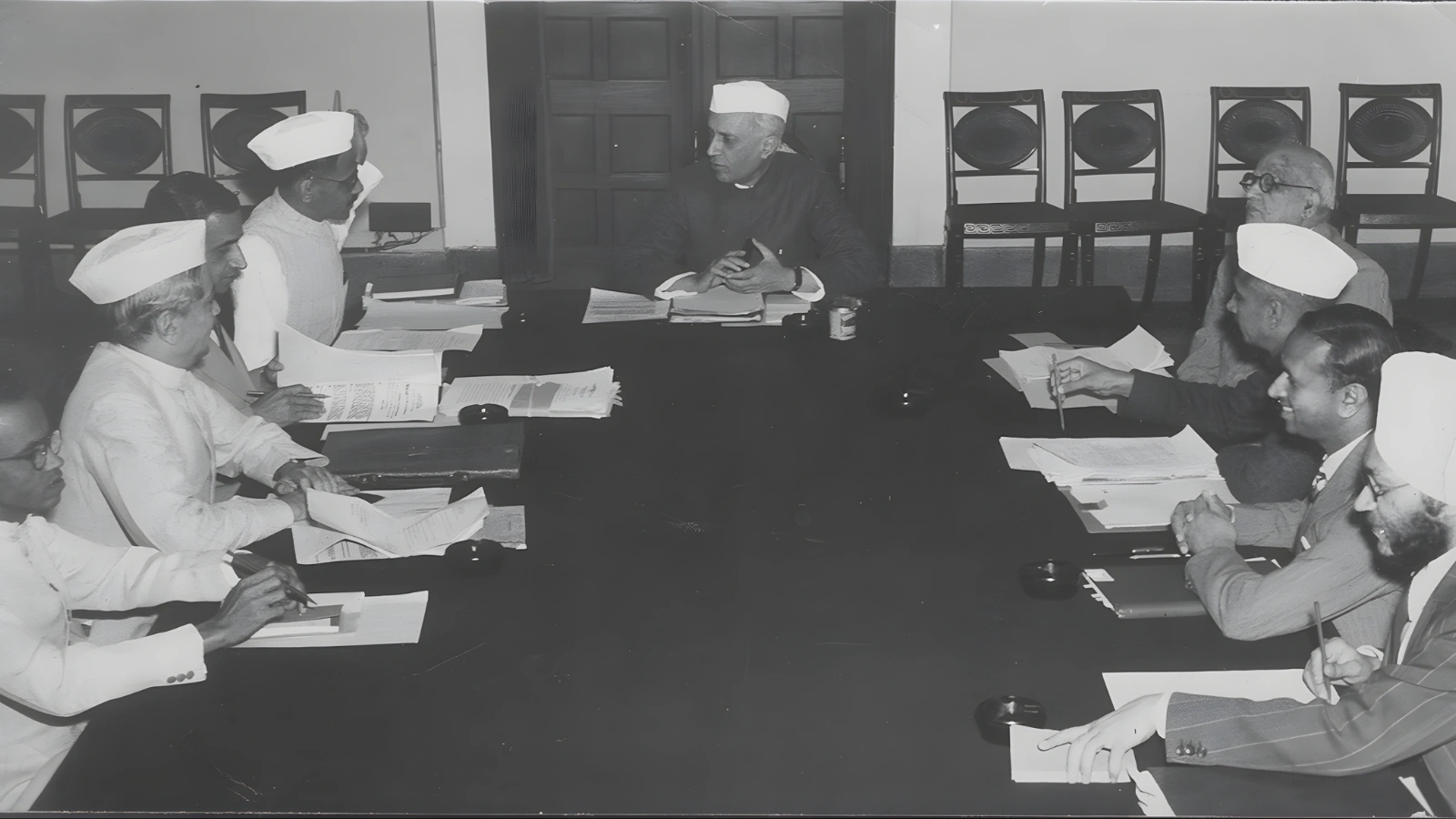
The Planning Commission alone could not run Indian planning. India is a federal country with many States. Agriculture, health and education are largely State subjects. A plan prepared only in Delhi would fail on the ground. The National Development Council was therefore formed in 1952. The Prime Minister works as the head of this Council. Union Ministers and all Chief Ministers are its members. Members of the Planning Commission also sat in it. The Council gave the final approval to the Five Year Plans. It was also not a constitutional or a statutory body.
The Plan Cycle: Who Prepares and Who Approves
The relationship between the two bodies is easy to remember. The Planning Commission prepared and drafted the plan. The National Development Council then examined and approved it. The government implemented the approved plan across the country. Work on the next plan then began once again.
This cycle also explains one common chronology question. The National Planning Committee came first, in 1938. The Planning Commission was formed next, in 1950. The National Development Council was formed in 1952. The First Five Year Plan started in April 1951. Its final version was approved by the Council afterwards. So approval of the First Plan came after 1952. [NDA 2022-II] Approval therefore stands last in this sequence of events.
| Institution | Year | Headed by | Main role |
| National Planning Committee | 1938 | Jawaharlal Nehru | Congress committee formed after the Haripura session [NDA 2010-I] |
| Planning Commission | 1950 | Prime Minister as chairman | Assessed resources and prepared the Five Year Plans [NDA 2024-II] |
| National Development Council | 1952 | Prime Minister, with all Chief Ministers | Approved the Five Year Plans [NDA 2022-II] |
5. Planning Personalities
A few economists appear again and again in planning questions. Their names are often mixed up during the examination. Learn what each person is actually associated with.
| Name | Actual planning association |
| P.C. Mahalanobis | Statistician known as the architect of Indian planning [NDA 2023-II]. Gave the model used by the Second Five Year Plan. Founder of the Indian Statistical Institute. |
| K.N. Raj | Young economist who played the leading role in drafting the First Five Year Plan [NDA 2015-II]. |
| V.K.R.V. Rao | Economist known for early estimates of India’s national income. He is not the architect of Indian planning. |
| Sukhamoy Chakravarty | Economist and member of the Planning Commission who wrote widely on Indian planning. |
| John Mathai | Finance Minister of the early years who resigned in 1950 over the Planning Commission. |
| J.C. Kumarappa | Gandhian economist associated with village and rural economy, not with the First Plan. |
| Shriman Narayan Agarwal | Prepared the Gandhian Plan in 1944. |
| M.N. Roy | Prepared the People’s Plan in 1945. |
| Jayaprakash Narayan | Prepared the Sarvodaya Plan in 1950. |
| PART B: THE FIVE-YEAR PLANS |
India now had a planning system in working order. The first plan started in 1951 and others followed it. Each plan fixed targets for the coming five years. Twelve such plans were made between 1951 and 2017. Before studying the plans, you must understand two planning models.
6. The Two Planning Models
A model is a simple way of explaining how growth happens. Planners use a model to decide where money should go. Indian planning used two different models in its early years.
The Harrod-Domar Approach
The Harrod-Domar approach came from two economists working separately. Their idea can be stated in one simple sentence. A country grows faster when it saves and invests more. Savings become investment, and investment creates new productive capacity. Growth also depends on something called the capital-output ratio. This ratio shows how much capital is needed for one unit of output. A lower ratio means capital is being used efficiently. The First Five Year Plan was based on this approach. You do not need the mathematics of this model. Remember the idea and remember the plan attached to it.
The Mahalanobis Model
P.C. Mahalanobis was one of India’s greatest statisticians. He gave the model used by the Second Five Year Plan. His central question was about long-term industrial strength. India could keep importing machines from other countries. But imports need foreign exchange, which India did not have. India therefore needed industries that could produce machines themselves.
Such industries are called heavy industries or basic industries. Their products are called capital goods or producer goods. A steel plant is a good example of this idea. Steel is then used to build more factories and machines. Consumer goods, such as cloth and soap, are used directly by people. The Mahalanobis model gave first priority to capital goods. Consumer goods would grow later from that industrial base. Growth would then continue without depending on imports.
The Nehru-Mahalanobis Strategy
This model became a national strategy under Jawaharlal Nehru. It is called the Nehru-Mahalanobis strategy of development. It was implemented for the first time in the Second Plan. [NDA 2018-II] The strategy rests on the two ideas given below.
- India should end its economic dependence on metropolitan capitalism.
- Agriculture should move from semi-feudal farming towards capitalist farming.
Metropolitan capitalism means the economies of the former colonial powers. India’s colonial economy had worked mainly for those foreign economies. Independent India wanted growth that stood on its own feet. Semi-feudal farming means old landlord-based agriculture with very little investment. Capitalist farming means farming for the market with modern inputs. Both ideas together aimed at self-reliance for the Indian economy. [NDA 2019-II]
| Point of difference | Harrod-Domar approach | Mahalanobis model |
| Basic idea | Growth depends on savings, investment and the capital-output ratio | Growth depends on building industries that produce machines |
| Main focus | Raising the rate of saving and investment | Heavy and basic industries producing capital goods |
| Plan attached | First Five Year Plan [NDA 2024-II] | Second Five Year Plan [NDA 2015-I] |
| Sector priority | Agriculture, irrigation and power | Industry, especially iron, steel and machinery |
7. The First Five Year Plan, 1951 to 1956
The First Five Year Plan ran from 1951 to 1956. It was launched when the economy was still in crisis. The Second World War had badly disturbed prices and supplies. Partition had broken trade links and displaced millions of people. Food production was low and prices were rising fast. The main objective was to correct this disequilibrium. [NDA 2020] Disequilibrium here means a badly disturbed and unbalanced economy. The plan therefore aimed at repair before rapid growth.
K.N. Raj played the leading role in drafting this plan. [NDA 2015-II] He was a young economist of about thirty years. Mahalanobis was not the author of the First Plan. His model belongs to the Second Plan instead.
The plan was based on the Harrod-Domar approach. Higher savings and investment were expected to raise the growth rate. Agriculture received the highest priority in this plan. Irrigation and power projects received large amounts of money. Among all the plans, agriculture and irrigation received their highest share of outlay here. Outlay means the total money allotted under a plan. Bhakra Nangal and Hirakud were major projects of this period. Rehabilitation of refugees after Partition was another urgent task. Transport and communication also received a share of attention.
The First Plan is treated as a successful plan. The growth target was about 2.1 per cent a year. The economy actually grew by about 3.6 per cent. Two good harvests helped this result a great deal.
8. The Second Five Year Plan, 1956 to 1961
The Second Five Year Plan is the most important plan in this chapter. Study this section slowly and read it completely.
Why the Direction Changed
The First Plan had largely repaired the damaged economy. India now wanted long-term strength and not only recovery. A country that imports all its machines remains dependent. Machines are needed to build factories, power plants and railways. India therefore needed industries that could produce machines. The Second Plan gave heavy industry the first priority. This is why it focused on rapid industrialisation. [NDA 2023-II]
Model and Strategy
The Second Plan was based on the Mahalanobis model. For this reason it is also called the Mahalanobis Plan. [NDA 2015-I] The Nehru-Mahalanobis strategy was implemented here for the first time. Heavy and basic industries received the largest share of investment. Steel plants were set up at Bhilai, Rourkela and Durgapur. These plants were built with foreign technical help.
The Socialistic Pattern of Society
The Second Plan carried a clear social objective as well. It sought to establish a socialistic pattern of society in India. [NDA 2026-I] Learn that phrase exactly as it is written. It does not mean a Soviet style communist system. It means growth whose benefits reach all sections of society. The State would control the key sectors of the economy. Private business would continue, but under public guidance. Inequality of income and wealth was to be reduced steadily.
| ★ IMPORTANT: Second Five Year Plan, 1956 to 1961 Also called the Mahalanobis Plan · Nehru-Mahalanobis strategy used for the first time Rapid industrialisation with stress on basic and heavy industries Aim of establishing a socialistic pattern of society in India |
The Industrial Policy Resolution of 1956
The Industrial Policy Resolution of 1956 supported this thinking. It divided Indian industries into three broad groups. The first group was reserved for the State alone. The second group was open to the State and to private firms. All remaining industries were left to the private sector. This resolution gave the public sector its commanding position.
The Stated Objectives of the Second Plan
A plan states its objectives at the beginning. The Second Plan stated the objectives given below.
- A sizeable increase in national income to raise the standard of living.
- Rapid industrialisation, with special stress on basic and heavy industries.
- A large expansion of employment opportunities in the country.
- Reduction of inequalities in income and wealth.
- A more even distribution of economic power in society.
Now notice carefully what does not appear in this list. Expansion of the consumer goods sector was not a stated objective. [NDA 2024-I] Consumer goods were expected to grow later on their own. The plan first wanted machines that could build more machines.
Objectives are what a plan intended to achieve. Achievements are what the economy actually did afterwards. Keep these two ideas separate while answering questions.
What the Second Plan Achieved
The Second Plan built a strong industrial base for India. It also created serious pressure on foreign exchange. Machines had to be imported and they were costly. Food production also did not grow fast enough. Growth stayed slightly below the target of the plan. Even so, the industrial foundation laid here proved lasting.
| Point of comparison | First Plan, 1951 to 1956 | Second Plan, 1956 to 1961 |
| Model | Harrod-Domar approach | Mahalanobis model |
| Key person | K.N. Raj drafted the plan | P.C. Mahalanobis gave the model |
| Priority sector | Agriculture, irrigation and power | Heavy and basic industries |
| Main objective | Correcting the disequilibrium caused by the Second World War [NDA 2020] | Rapid industrialisation and a socialistic pattern of society |
| Outlay | Highest share to agriculture and irrigation | Largest share moved to industry |
| Result | Exceeded its growth target | Built industry but strained foreign exchange |
9. All Twelve Five Year Plans at a Glance
The table below covers all twelve Five Year Plans. Matching questions are built out of these objectives and slogans. Revise this table until every row feels familiar.
| Plan and years | Model or approach | Main objective or priority | Slogan or identity |
| First 1951 to 1956 | Harrod-Domar approach | Correcting the disequilibrium caused by the Second World War; agriculture, irrigation and power [NDA 2020] | Repair and rehabilitation; highest agriculture and irrigation outlay [NDA 2023-I] |
| Second 1956 to 1961 | Mahalanobis model | Rapid industrialisation with stress on basic and heavy industries [NDA 2023-II] | Mahalanobis Plan; socialistic pattern of society [NDA 2015-I] |
| Third 1961 to 1966 | Not Harrod-Domar; work of Sukhamoy Chakravarty and John Sandee | A self-reliant and self-generating economy; agriculture and industry together | Failed because of two wars and a severe drought |
| Annual Plans 1966 to 1969 | No five year model | Agriculture, food production and price stability | The Plan Holiday; three Annual Plans [NDA 2025-II] |
| Fourth 1969 to 1974 | Gadgil formula for State assistance | Growth with stability and progressive achievement of self-reliance | Period of bank nationalisation |
| Fifth 1974 to 1979 | No named model | Removal of poverty and attainment of self-reliance | Garibi Hatao [NDA 2020] |
| Sixth 1980 to 1985 | No named model | Removal of poverty, employment and modern technology | Economic liberalisation begins in a limited way |
| Seventh 1985 to 1990 | No named model | Growth of foodgrains, employment and productivity | Food, Work and Productivity [NDA 2025-I] |
| Eighth 1992 to 1997 | No named model | Modernisation of industry and human resource development | First plan after the reforms of 1991 |
| Ninth 1997 to 2002 | No named model | Growth with social justice and equality; priority to agriculture and rural development [NDA 2024-II] | Launched in the fiftieth year of Independence |
| Tenth 2002 to 2007 | No named model | Doubling of per capita income within ten years | Target of eight per cent growth |
| Eleventh 2007 to 2012 | No named model | Towards faster and more inclusive growth [NDA 2020] | Inclusive growth |
| Twelfth 2012 to 2017 | No named model | Faster, more inclusive and sustainable growth [NDA 2020] | The last Five Year Plan of India |
10. Plans That Need a Closer Look
Third Plan, 1961 to 1966
The Third Plan aimed at a self-reliant and self-generating economy. It wanted agriculture and industry to grow together. Three serious shocks damaged this plan very badly. The war with China came in the year 1962. The war with Pakistan came in the year 1965. A severe drought struck the country in 1965 and 1966. Defence spending rose while food production fell sharply. The Third Plan was not based on the Harrod-Domar approach. That approach belongs to the First Plan alone.
Fifth Plan, 1974 to 1979
The Fifth Plan carried two well-known objectives at the same time. The first was removal of poverty, known as Garibi Hatao. The second objective was the attainment of self-reliance. The Minimum Needs Programme belonged to this plan. It was brought to an end one year early by a new government.
Seventh Plan, 1985 to 1990
The Seventh Plan is remembered by three words together. Its stated objectives were food, work and productivity. Food here meant a larger production of foodgrains. Work meant more employment for the growing labour force. Productivity meant better output from the same resources.
Ninth Plan, 1997 to 2002
The Ninth Plan began in the fiftieth year of India’s Independence. Its stated objective was growth with social justice and equality. Agriculture and rural development received high priority once again. The First Plan had given agriculture the same importance. [NDA 2024-II] The Ninth Plan did not rest on massive public sector investment. It expected the private sector to invest much more.
Eleventh and Twelfth Plans
The theme of the Eleventh Plan was faster and more inclusive growth. Inclusive growth means growth that reaches every section of society. The theme of the Twelfth Plan was faster, more inclusive and sustainable growth. Sustainable growth adds concern for the environment and for future generations. The two themes look similar, so read them very carefully.
The Remaining Plans
The Fourth, Sixth, Eighth and Tenth Plans need less attention. Even so, learn their years from the master table above. A matching question can use any plan without warning.
11. Annual Plans and the Plan Holiday, 1966 to 1969
The Five Year Plan sequence broke once in Indian history. The Third Plan ended in 1966 in very poor condition. Two wars had drained the money available to the government. A severe drought had reduced food production sharply. India had to import foodgrains in large quantities. Prices were rising and foreign exchange was short. The rupee was also devalued in the year 1966.
Under such conditions a new Five Year Plan was not possible. The government therefore made three Annual Plans instead. These three plans covered the years 1966 to 1969. [NDA 2025-II] This period is known as the Plan Holiday. The word holiday refers only to the break in Five Year Plans. Planning itself did not stop during these three years.
| ★ IMPORTANT: The Plan Holiday Three Annual Plans were formulated between 1966 and 1969 Cause: two wars, a severe drought, food shortage and a shortage of money The Fourth Five Year Plan then began in 1969 |
Agriculture received first attention during these three years. New high-yielding variety seeds were introduced in Indian fields. Wheat production rose quickly in Punjab and Haryana. This change is known as the Green Revolution. The Fourth Five Year Plan then began in 1969.
12. Plan Outlay and Sectoral Priorities
Outlay means the total money set aside under a plan. The share given to each sector shows the real priority. Agriculture and irrigation received their largest share in the First Plan. [NDA 2023-I] No later plan gave these two sectors so large a share. The Second Plan moved the largest share towards industry. That single change explains the difference between the two plans. Sector shares are a good guide to the true intention of a plan.
13. The End of the Planning Era
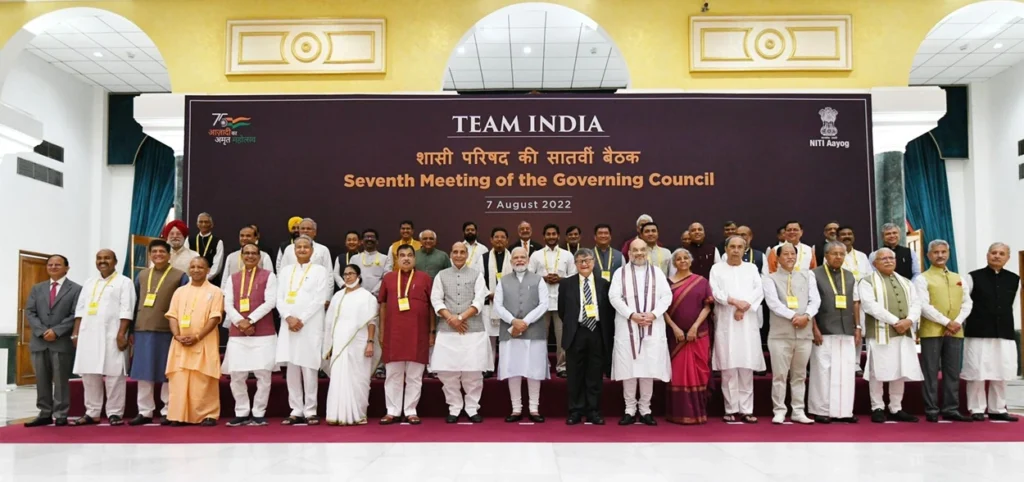
The Twelfth Plan was the last Five Year Plan of India. It came to an end on 31 March 2017. The Planning Commission itself was replaced before that. NITI Aayog was set up on 1 January 2015. NITI stands for National Institution for Transforming India. It is an advisory body and a policy think tank. It does not prepare or approve Five Year Plans. It also does not allocate funds to the States. It works with the States as partners in development. The Prime Minister of India serves as its chairperson.
Quick Revision
WHY INDIA PLANNED
- Weak economy in 1947 · low industry · low farm yields · poverty
- Limited money, so priorities had to be fixed in advance
- Five Year Plan device first launched in the USSR [NDA 2020]
- Indian planning drew on the Fabian socialism of Sidney and Beatrice Webb [NDA 2010-I]
- Lenin’s New Economic Policy was not the source of Indian planning
- Idea of planning in independent India drawn from the Bombay Plan [NDA 2022-I]
PLANS BEFORE THE FIRST FIVE YEAR PLAN
- Bombay Plan, 1944, by industrialists including Tata and Birla
- It emphasised public sector investment in infrastructure and heavy industry [NDA 2011-I]
- Gandhian Plan, 1944, by Shriman Narayan Agarwal [NDA 2012-I]
- People’s Plan, 1945, by M.N. Roy
- Sarvodaya Plan, 1950, by Jayaprakash Narayan
- All four came before the First Plan and none was implemented [NDA 2024-II]
- Karachi Resolution, 1931: the State shall own or control key industries
PLANNING INSTITUTIONS
- National Planning Committee, 1938, chairman Jawaharlal Nehru [NDA 2012-I]
- Idea of a planning commission introduced at the Haripura session, 1938 [NDA 2010-I]
- Planning Commission, 1950 · non-constitutional and non-statutory · Prime Minister as chairman
- Its objectives: assessment of all resources, higher production, employment for all [NDA 2024-II]
- National Development Council, 1952 · approved the Five Year Plans
- Sequence: NPC 1938, Planning Commission 1950, NDC 1952, First Plan approval [NDA 2022-II]
PLANNING MODELS
- Harrod-Domar approach: savings, investment and the capital-output ratio · First Plan [NDA 2024-II]
- Mahalanobis model: heavy industry and capital goods · Second Plan [NDA 2015-I]
- Nehru-Mahalanobis strategy implemented first in the Second Plan [NDA 2018-II]
- Strategy content: end dependence on metropolitan capitalism, move to capitalist farming [NDA 2019-II]
- P.C. Mahalanobis is the architect of Indian planning [NDA 2023-II]
- K.N. Raj drafted the First Five Year Plan [NDA 2015-II]
FIRST PLAN, 1951 TO 1956
- Objective: correcting the disequilibrium caused by the Second World War [NDA 2020]
- Harrod-Domar approach · agriculture, irrigation and power
- Highest share of outlay to agriculture and irrigation among all plans [NDA 2023-I]
- Bhakra Nangal and Hirakud · refugee rehabilitation · target exceeded
SECOND PLAN, 1956 TO 1961
- Also called the Mahalanobis Plan [NDA 2015-I]
- Rapid industrialisation based growth · basic and heavy industries [NDA 2023-II]
- Aim of a socialistic pattern of society [NDA 2026-I]
- Objectives: higher national income, rapid industrialisation, more employment
- Objectives: less inequality of income and wealth, wider spread of economic power
- Expansion of the consumer goods sector was not a stated objective [NDA 2024-I]
- Industrial Policy Resolution, 1956 · Bhilai, Rourkela and Durgapur steel plants
SLOGANS AND OBJECTIVES TO REMEMBER
- Fifth Plan: Garibi Hatao and self-reliance [NDA 2020]
- Seventh Plan: Food, Work and Productivity [NDA 2025-I]
- Ninth Plan: growth with social justice and equality [NDA 2025-I]
- Eleventh Plan: towards faster and more inclusive growth [NDA 2020]
- Twelfth Plan: faster, more inclusive and sustainable growth [NDA 2020]
- Third Plan: a self-reliant and self-generating economy
- Fourth Plan: growth with stability and self-reliance
- Tenth Plan: doubling of per capita income in ten years
PLAN HOLIDAY AND THE END OF PLANNING
- Three Annual Plans between 1966 and 1969 [NDA 2025-II]
- Cause: wars of 1962 and 1965, drought, food shortage, devaluation of 1966
- Green Revolution began with high-yielding variety seeds
- Ninth Plan began in the fiftieth year of Independence · agriculture given high priority [NDA 2024-II]
- Twelfth Plan, 2012 to 2017, was the last Five Year Plan
- NITI Aayog set up on 1 January 2015 · advisory body · does not allocate funds