NDA Current Affairs | 13 Sep Exam
Practice Now

Water Resources – NDA Geography Notes
Exam Relevance: High Frequency | Dam-River Matching, Canal Identification, Tank Irrigation, Hydroelectric Projects, River Disputes, Rainwater Harvesting
Indian Geography • Coastal Geography • PYQs Included
India receives a good amount of rain every year. But this rain is not evenly spread: some regions get too much, others get very little. Most of the rain also falls in just three to four months during the monsoon. For the rest of the year, rivers run low and water becomes scarce.
This chapter is about how India manages its water. It covers sources of water, types of irrigation, major multipurpose dam projects, river water disputes, and rainwater harvesting. NDA tests this chapter through dam-river matching, canal identification, tank irrigation reasons, and specific questions about projects. These questions appear regularly and reward precise factual knowledge.
Sources of Water in India
India gets water from three main sources. Rainfall provides an average of about 1,170 mm per year, but most of it falls during the Southwest Monsoon (June to September). The rest of the year is mostly dry. Rivers carry water from mountains and rain-fed areas to drier regions, supplying both surface water and groundwater. Groundwater is stored in underground layers called aquifers and drawn up by tube wells and bore wells for irrigation and drinking.
Groundwater demand increased greatly with the Green Revolution, because high-yield crops need far more water than traditional varieties. Replenishable groundwater reserves are highest in states like Uttar Pradesh, Bihar, and West Bengal, not in Sikkim, Nagaland, or Tripura.
Irrigation in India
India’s agriculture depends heavily on irrigation. Only about 30% of India’s net sown area receives reliable rainfall. The rest needs artificial irrigation. India uses three main types.
Canal Irrigation
Water is brought to fields through channels dug from rivers or reservoirs. This is most suitable in flat, alluvial plains where water flows easily. Canal irrigation is most developed in the Northern Plains: the Ganga-Yamuna plains, Punjab, and Haryana.
Bhakra Canal is the most important canal in Haryana in terms of area coverage. [NDA 2015-I] Western Yamuna Canal is another important canal in Haryana, drawing water from the Yamuna at Yamunanagar. Canals and bore wells can be dug most easily in the soft alluvium of the Northern Plains. [NDA 2012-II]
Well and Tube Well Irrigation
Water is drawn from underground by wells or tube wells. This is most suitable where groundwater is plentiful and accessible, and most common in the Northern Plains, where the alluvial soil is soft and groundwater is close to the surface. The deltaic regions of Mahanadi, Godavari, and Krishna also support well irrigation well.
Tank Irrigation
Tanks are small reservoirs built by constructing a low embankment across a stream. They collect rainwater during the monsoon and store it for use in summer. Tank irrigation is most common in Peninsular India, especially in South-Central India. [NDA 2011-I]
Why is tank irrigation practised in Peninsular India? [NDA 2011-I]
The terrain is uneven and rocky, making canals hard to build. Hard, impervious rocks prevent rainwater from percolating into the ground, leaving insufficient shallow groundwater for wells. Rivers are seasonal, flowing only during the monsoon. Undulating terrain helps accumulate rainwater in natural depressions. And many streams become torrential in the rainy season and can easily be dammed.
Tank and well irrigation are negatively related, where tanks are common and wells are rare. Tank irrigation is found in areas with impervious rock layers where water cannot seep down to form aquifers. That is the very condition that makes well irrigation impossible.
Multipurpose River Projects
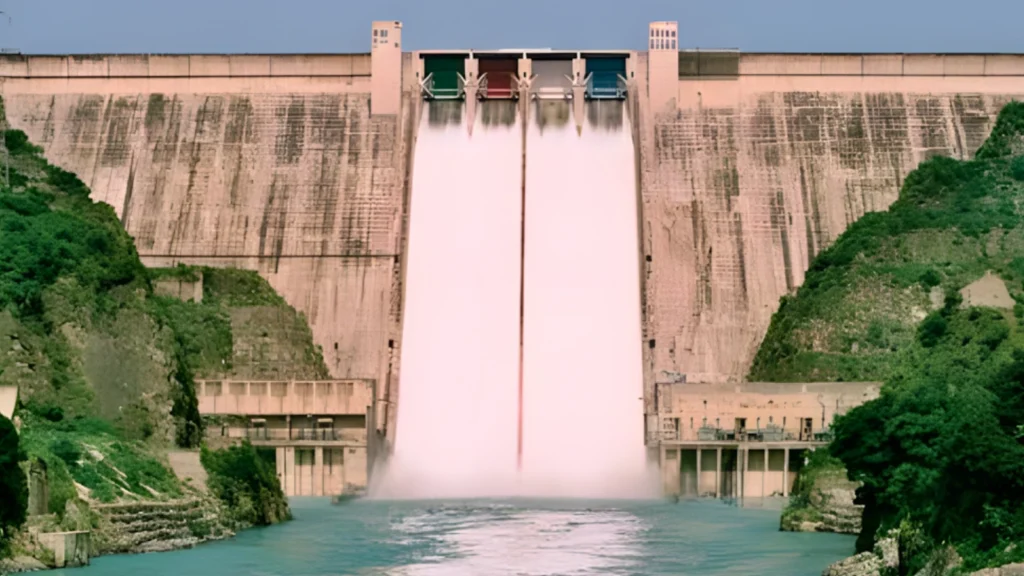
India has built many large dams on its rivers that serve more than one purpose, hence the name multipurpose projects. Their purposes include irrigation, hydroelectric power generation, flood control, navigation, drinking water supply, and recreation and fisheries. Jawaharlal Nehru called these multipurpose dams “temples of modern India”, believing they would bring development, electricity, and food security to the nation.
| Dam / Project | River | State | Key Notes |
| Bhakra Nangal | Sutlej | HP / Punjab | Feeds Bhakra Canal; most important in Haryana [NDA 2015-I] |
| Hirakud Dam | Mahanadi | Odisha | One of longest earthen dams; near Sambalpur [NDA 2006-I] |
| Nagarjuna Sagar | Krishna | AP / Telangana | One of world’s largest masonry dams [NDA 2016-I] |
| Srisailam Dam | Krishna | AP / Telangana | Major hydroelectric project on Krishna |
| Gandhi Sagar | Chambal | Madhya Pradesh | [NDA 2007-I] |
| Rana Pratap Sagar | Chambal | Rajasthan | Hydroelectric project [NDA 2014-II] |
| Ukai Dam | Tapti (Tapi) | Gujarat | NOT a hydroelectric project: thermal power station nearby [NDA 2014-II] |
| Tehri Dam | Bhagirathi | Uttarakhand | Highest dam in India |
| GB Pant Sagar | Rihand | Uttar Pradesh | — |
| Tawa Reservoir | Tawa (Narmada tributary) | Madhya Pradesh | Near Pachmarhi [NDA 2006-I] |
| KRS (Krishnarajasagara) | Cauvery | Karnataka | Irrigates large parts of Karnataka |
| Mettur Dam | Cauvery | Tamil Nadu | Forms Stanley Reservoir |
| Ranjit Sagar Dam | Ravi | Punjab | NOT on Beas [NDA 2007-I] |
| Bagalihar Dam | Chenab | J&K | All three on Chenab only [NDA 2020-I] |
| Dulhasti Dam | Chenab | J&K | — |
| Salal Dam | Chenab | J&K | — |
| Bhavani Sagar Dam | Bhavani | Tamil Nadu | — |
| Damanganga Reservoir | Damanganga | Dadra & Nagar Haveli | — |
Neyveli is NOT a hydroelectric project. It is a thermal power plant using lignite coal. [NDA 2014-II] Papanasam and Rana Pratap Sagar are hydroelectric projects.
★ IMPORTANT Four dam-river pairs NDA tests as traps: Ranjit Sagar = Ravi (not Beas). Hirakud = Mahanadi (not Damodar). Alamatti = Krishna (not Cauvery). Mettur = Cauvery (not Krishna). Neyveli = Thermal (not hydroelectric). [NDA 2007-I | NDA 2007-II | NDA 2014-II]
Hydroelectric projects on the Chenab: Bagalihar, Dulhasti, and Salal are all on the Chenab River in J&K. [NDA 2020-I] The Salal Power Project is also on the Chenab River. Under the Indus Waters Treaty, India has the right to build run-of-the-river power projects on the western rivers including the Chenab.
The Cauvery Water Dispute
The Cauvery water dispute is one of India’s oldest and most complex river water conflicts. The states involved are Kerala, Karnataka, Tamil Nadu, and the Union Territory of Puducherry. Tamil Nadu argues it needs water for the Cauvery delta farmers who grow paddy. Karnataka argues it needs water for its growing population and agriculture. The dispute went through decades of legal battles, with the Supreme Court of India eventually issuing an award on how to share the water.
River Water Interlinking
Some rivers in India have surplus water while others face serious shortage. The National River Linking Project proposes to transfer water from surplus river basins to deficit basins through a network of canals and tunnels. The Ken-Betwa Link Project in Madhya Pradesh is the first river interlinking project to receive approval and begin construction. It will transfer water from the Ken River (a Yamuna tributary) to the Betwa River, helping water-scarce districts in Madhya Pradesh and Uttar Pradesh.
Rainwater Harvesting
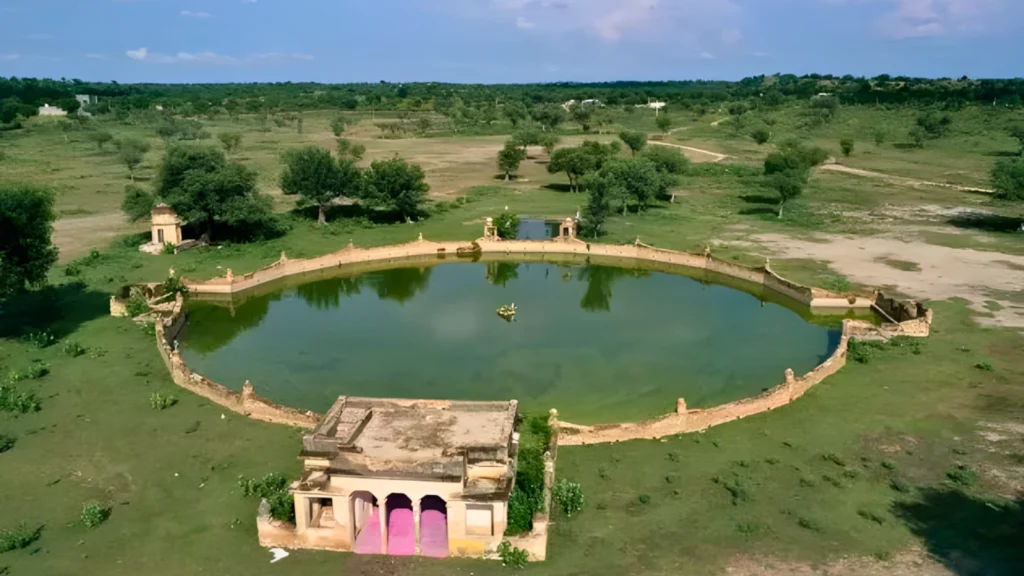
Rainwater harvesting means collecting and storing rainwater for future use before it flows away as runoff. It is especially important in cities where concrete surfaces prevent water from entering the ground, in dry regions where groundwater is scarce, and in areas that face seasonal water shortage.
Traditional Systems of Rainwater Harvesting in India
| System | Region | Description |
| Johad | Rajasthan | Traditional earthen check dam to store rainwater |
| Kundi / Tanka | Rajasthan | Underground tank to collect and store roof water |
| Kul | Himachal Pradesh | Diversion channel from glacial streams to fields |
| Baoli (Stepwell) | Rajasthan / Delhi | Ancient stepwell for collecting groundwater |
| Ahar Pynes | Bihar | Traditional surface water channels |
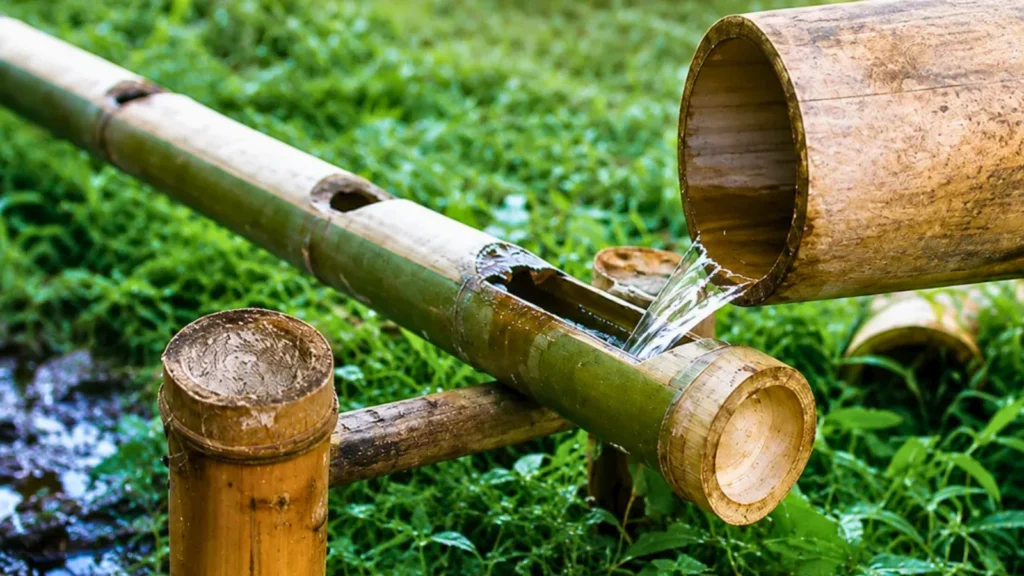
| Bamboo drip | Northeast India | Uses bamboo pipes to channel spring water to fields |
| Zabo | Nagaland | Community rainwater harvesting system in hills |
Not suitable for urban rainwater harvesting: A gully plug is a watershed management technique used in rural and hilly areas to check soil erosion. It is not suitable for urban settings. Rooftop recharge pits, recharge wells, and recharge trenches are the appropriate urban methods.
Challenges of Water Resources in India
Floods affect regions like Assam, Bihar, and coastal Odisha every year. The Brahmaputra and Kosi are the most flood-prone rivers. Droughts recur in Rajasthan, parts of Maharashtra, Andhra Pradesh, and Karnataka. Groundwater depletion from heavy tube well use, especially after the Green Revolution, has lowered the water table in many states. Pollution in rivers like the Ganga and Yamuna is severe from cities and industries.
Safety of large dams: Genuine threats include urbanisation near dam sites, flash floods in the catchment area, and seismic activity in the surrounding area. All three are recognised dam safety concerns.
Quick Revision
SOURCES OF WATER
- Rainfall, rivers, groundwater (exploited by tube wells)
- Groundwater demand increased with the Green Revolution
- Highest replenishable groundwater reserves: UP, Bihar, West Bengal
THREE TYPES OF IRRIGATION
| Type | Best Region | Reason | NDA Tag |
| Canal | Northern Plains | Flat, alluvial, perennial rivers | [NDA 2015-I] |
| Well / Tube Well | Northern Plains, river deltas | Soft alluvium, shallow groundwater | [NDA 2012-II |
| Tank | Peninsular India (South-Central) | Hard rocks, seasonal rivers, impervious terrain | [NDA 2011-I] |
Tank and well irrigation are negatively related. Impervious rocks that enable tanks prevent groundwater formation for wells.
RAINWATER HARVESTING
- Urban methods: Rooftop recharge pit, recharge well, recharge trench
- NOT for urban use: Gully plug (rural watershed technique)
- Traditional systems: Johad (Rajasthan), Kul (HP), Zabo (Nagaland), Bamboo drip (NE India), Tanka/Kundi (Rajasthan), Baoli (Rajasthan/Delhi), Ahar Pynes (Bihar)
KEY DAMS AND RIVERS
| Dam | River | State | NDA Tag |
| Bhakra Nangal | Sutlej | HP / Punjab | Bhakra Canal = most important in Haryana [NDA 2015-I] |
| Hirakud | Mahanadi | Odisha | NOT Damodar [NDA 2006-I |
| Gandhi Sagar | Chambal | MP | [NDA 2007-I] |
| Rana Pratap Sagar | Chambal | Rajasthan | Hydroelectric [NDA 2014-II] |
| Nagarjuna Sagar | Krishna | Andhra Pradesh | [NDA 2016-I] |
| Ukai | Tapti | Gujarat | NOT hydroelectric [NDA 2014-II] |
| Tehri | Bhagirathi | Uttarakhand | Highest dam in India |
| GB Pant Sagar | Rihand | UP | — |
| Tawa Reservoir | Tawa (Narmada tributary) | MP | Near Pachmarhi [NDA 2006-I] |
| Ranjit Sagar | Ravi | Punjab | NOT Beas [NDA 2007-I] |
| Mettur | Cauvery | Tamil Nadu | NOT Krishna [NDA 2007-II] |
| KRS | Cauvery | Karnataka | — |
| Bagalihar / Dulhasti / Salal | Chenab | J&K | Chenab only [NDA 2020-I] |